
Black Kansas: A Story of Freedom, Leadership, Culture, and Community

To understand Kansas, you must understand Black Kansas.
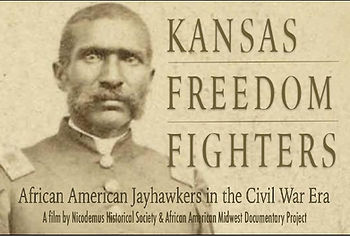
The history of Black Kansans is a story of courage, determination, faith, and achievement. It begins with freedom seekers, Black homesteaders, and Exodusters who came to Kansas after the Civil War looking for opportunity, land ownership, self-determination, and citizenship. Thousands of African Americans left the South and traveled west to build new lives. They established farms, schools, churches, businesses, and entire communities that helped shape the state we know today.
One of the most important of these communities was Nicodemus, founded in 1877 by formerly enslaved African Americans. Today, Nicodemus remains the only surviving Black settlement west of the Mississippi River established during the Reconstruction Era. It stands as a powerful symbol of perseverance and reminds us that Black Kansans were not simply participants in history. They were builders, leaders, and visionaries who helped shape the American West.
At the same time, Buffalo Soldiers served throughout Kansas and the Great Plains. These African American soldiers helped protect settlements, build transportation routes, and support westward expansion. Despite facing discrimination and unequal treatment, they served with honor and distinction. The stories of Black homesteaders and Buffalo Soldiers are closely connected because both groups helped build Kansas and the American West.
Eastern Kansas also became a center of abolitionist activity and Black advancement. Communities such as Quindaro and Kansas City served as important stops on the Underground Railroad and later became centers of Black business, education, faith, and leadership. Long before the modern Civil Rights Movement, Black Kansans were creating institutions that would support future generations.
Black Wichita and the Fight for Civil Rights
Wichita became one of the most important centers of Black life in Kansas. Churches, civic organizations, businesses, educators, and community leaders built strong neighborhoods and lasting institutions.
One of the most important religious institutions was Tabernacle Bible Church. Its roots go back to 1881 when believers migrated from Louisiana and Tennessee seeking greater religious freedom and economic opportunity. Over time, the church became a cornerstone of Wichita's Black community and continues to serve the city today.
Wichita also played a major role in the Civil Rights Movement. In 1958, young activists led a sit-in at the Dockum Drug Store lunch counter in downtown Wichita. Their peaceful protest successfully challenged segregation years before the better-known Greensboro sit-ins. The Dockum Sit-In proved that Kansas was not simply watching the Civil Rights Movement unfold. Kansas was helping lead it.
Today, many of these stories are preserved by the Kansas African American Museum. Located in the historic Calvary Baptist Church building, the museum shares the stories of Black Kansans through exhibits, research, and educational programs. The surrounding neighborhood was once home to Black-owned businesses, entertainers, athletes, churches, and community leaders who helped shape Wichita's history.
Notable Black Kansans to Know
The story of Black Kansas can be told through the lives of remarkable individuals whose achievements influenced the state, the nation, and the world.
Benjamin "Pap" Singleton led the Exoduster Movement and encouraged thousands of formerly enslaved African Americans to move to Kansas in search of freedom, land ownership, and opportunity.
William Dominick Matthews helped found Nicodemus and became one of the leading architects of Black settlement in western Kansas.
Oscar Micheaux, who lived and worked near Nicodemus, became America's first major African American filmmaker. His experiences as a Kansas homesteader inspired films and books that challenged stereotypes and told authentic Black stories.
Rev. J. Countee was an early religious leader who helped establish one of Wichita's oldest Black congregations, which later became Tabernacle Bible Church.
Langston Hughes spent part of his childhood in Lawrence. He became one of the most influential poets and writers of the Harlem Renaissance and one of the most important voices in American literature.
Gordon Parks was born in Fort Scott and became a world-renowned photographer, filmmaker, novelist, musician, and journalist. As the first African American staff photographer for Life magazine, he documented poverty, segregation, and social justice issues while celebrating the dignity of everyday people.
Charlie Parker, known as "Bird," was a jazz legend from Kansas City who revolutionized modern music through the development of bebop.
Hattie McDaniel was born in Wichita and became the first African American to win an Academy Award, breaking racial barriers in Hollywood.
Dr. Chester I. Lewis Jr. was a Wichita attorney and civil rights leader who helped lead desegregation efforts, voting rights campaigns, and economic justice initiatives throughout Kansas.
Ron Walters, also from Wichita, became one of the nation's leading political scientists, educators, and civil rights strategists.
Arthur B. Sim worked to advance civil rights and educational opportunities for African Americans throughout Wichita.
Wendell Phillips helped expand educational opportunities for Black Kansans through his work as an educator and civic leader.
Dr. Samuel C. Jackson improved healthcare access and community development through his leadership and advocacy.
Joan Cartwright advanced education and public service through her work as an educator and civic leader.
Marla Luckert broke barriers in the legal profession and became the first African American woman to serve as Chief Justice of the Kansas Supreme Court.
Lynette Woodard of Wichita became an Olympic gold medalist and the first woman to play for the Harlem Globetrotters.
Barry Sanders, a Wichita native, became one of the greatest running backs in football history and earned a place in the Pro Football Hall of Fame.
Maurice Greene of Kansas City, Kansas became an Olympic champion and one of the fastest sprinters in world history.
Calvin Coolidge Hernton of Wichita became a respected poet, scholar, playwright, and civil rights activist.
Damon Parker Williams of Kansas City, Kansas became an acclaimed sculptor whose public artwork celebrates African American history and culture.
Kevin Willmott of Junction City became an Academy Award-winning filmmaker, screenwriter, and historian known for examining race and American history.
James Naismith, the inventor of basketball, helped create a sports tradition at the University of Kansas that influenced generations of Black athletes and coaches.
Edmonia Lewis became one of the first internationally recognized African American and Native American sculptors, creating works that celebrated freedom, equality, and human dignity.
Together, these leaders connect Nicodemus, Fort Scott, Lawrence, Wichita, Kansas City, Topeka, and Junction City into one powerful story of perseverance, achievement, and leadership.
Historical and Cultural Sites to Visit
Kansas African American Museum
601 N. Water Street, Wichita
The best place to begin learning about Black Kansas history. Located in the historic Calvary Baptist Church building, the museum preserves and shares the stories of Black homesteaders, civil rights leaders, churches, educators, artists, and community builders.
Dockum Drug Store Sit-In Site
904 E. Douglas Avenue, Wichita
One of the most important civil rights landmarks in America. This is where young activists successfully challenged segregation in 1958.
Tabernacle Bible Church
1817 N. Volutsia Street, Wichita
One of Wichita's oldest Black congregations and a lasting symbol of faith, leadership, and community service.
Historic Dunbar Community Center
1007 N. Cleveland Street, Wichita
A center for African American culture, community history, and neighborhood pride.
Wichita-Sedgwick County Historical Museum
204 S. Main Street, Wichita
Located in the city's original City Hall, this museum provides an excellent overview of Wichita and Sedgwick County history.
Old Cowtown Museum
1865 Museum Boulevard, Wichita
A living history museum depicting Wichita during the late nineteenth century when Exodusters and Black homesteaders were building communities across Kansas.
Keeper of the Plains
339 Veterans Parkway, Wichita
Wichita's most recognized landmark, honoring Native American history and culture.
Mid-America All-Indian Museum
650 N. Seneca Street, Wichita
Dedicated to preserving and interpreting Native American history and culture.
Nicodemus National Historic Site
Nicodemus, Kansas
The only remaining Black settlement founded during Reconstruction west of the Mississippi River.
Brown v. Board of Education National Historical Park
Topeka, Kansas
Tells the story of the landmark Supreme Court decision that ended legal school segregation.
Fort Scott National Historic Site
Fort Scott, Kansas
The birthplace of Gordon Parks and an important location in the history of Bleeding Kansas, the Civil War, Buffalo Soldiers, and westward expansion.
Kansas Historical Society
The state's leading resource for research on Nicodemus, Exodusters, Buffalo Soldiers, Black homesteaders, civil rights history, and Kansas communities.
Conclusion
Black Kansas history is American history. From Nicodemus and the Exodusters to the Buffalo Soldiers, from Langston Hughes and Gordon Parks to the Dockum Sit-In and the Kansas African American Museum, Black Kansans have shaped the state's identity for more than 150 years. Their achievements in education, religion, business, politics, law, medicine, literature, music, film, athletics, and civil rights continue to inspire future generations. Their story is not a side chapter in Kansas history. It is one of the central stories of Kansas itself.


Comments